Panic Companion is a mobile application tailored to help individuals detect, track, and manage panic attacks effectively. By leveraging cutting-edge technology and evidence-based approaches, the app provides users with tools to better understand and address their mental health needs.
Key features of Panic Companion include:
- Integration with wearables: Seamlessly connect your device to monitor heart rate variability (HRV) and other physiological signals, detecting early signs of panic.
- Data analysis with AI: Advanced Large Language Models (LLMs) analyze collected data to identify patterns and provide actionable insights.
- Personalized coping strategies: The app offers a range of interventions, including guided breathing exercises and grounding techniques, tailored to your specific needs.
- Attack tracking and trend analysis: Keep a detailed record of panic attacks to uncover potential triggers and trends, enabling informed adjustments to your lifestyle or treatment plan.
- Collaborative insights: Share your data with therapists or healthcare providers to enhance therapeutic outcomes and foster a deeper understanding of your experiences.
Panic Companion empowers users to take charge of their mental health through proactive detection, personalized interventions, and actionable insights, offering support whenever and wherever it’s needed.
As part of our research project, the usability of the developed system was examined in an initial user evaluation. A total of 13 participants took part in the study. The sample consisted primarily of individuals aged 25–34 (54%) and 55+ (38%), with 8% in the 35–44 age group. Gender distribution was approximately balanced (54% male, 46% female). In terms of self-rated proficiency, participants predominantly reported higher levels of experience (54% “Advanced”, 38% “Intermediate”, 8% “Beginner”).
To assess usability in a standardized manner, we applied the System Usability Scale (SUS). The results indicate very high acceptance and an overall excellent perceived usability of the system. Participants largely agreed with positively worded statements regarding system use and handling (e.g., frequent use, ease of use, good integration of functions, rapid learnability), while negatively worded items (e.g., unnecessary complexity, cumbersome operation, inconsistencies, or the need for technical support) were mostly rejected. This response pattern suggests high perceived intuitiveness, consistency, and learnability of the system.
The overall SUS score is approximately 93 points, placing the system in the A+ (“Best Imaginable”) range in benchmark comparisons and within the “Acceptable” category. The distribution of individual SUS scores is consistently high across participants, with only minor downward deviations. Overall, the evaluation provides robust indications that the system already achieves a very high level of usability in its current form.
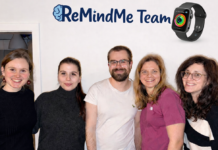
A project at the St. Pölten University of Applied Sciences
Master Program Digitale Healthcare
Project Coach: Dr. rer. nat. Vanessa Yue Fei Leung